Categories
Learn Korean Language

Learn Korean Numbers Guide

How to Write Korean Numbers?

The Korean language has two frequently used Korean number systems:

  • Sino Korean
  • Native Korean.

Understanding how to write both Korean number system should take very little time and effort to learn.

To Avoid your initial confusion on when and in what situation to use which number system I put together lists in which each Korean number system applies to.


Korean Sino-Korean Numbers

• For any number 100 or higher since Native Korean numbers only go up to 99.
• Counting any unit of time other than hours
• Measurements (, grams, , etc.)
• Phone numbers
• For creating the names of the months (number of month + ?)
• Money / currency
• Math

You basically write the Korean Characters in order. If the number is a double or triple digit number you write the Number times Position, Number times Position.

Korean Number Examples

It’s actually pretty straightforward when it comes to learning how to use the Sino Korean number system. Pronouncing Sino Korean numbers is just as easy to learn.

Korean Numbers 1 to 10


Korean Sino-Korean Numbers 1 to 100

To illustrate what I mean, here is Sino Korean numbers 1 to 100.

Korean Numbers 1 to 100

Native Korean Numbers

When to use Native Korean
• Counting physical objects (including people) and usually followed by a count word.
• Years of age
• Hours
• Counting (in general)
• Counting months (but only when used with the native Korean word for month/moon: ?)

Native Korean Numbers are written exactly like they are written above.

It’s actually pretty straightforward when it comes to learning how to use the Native Korean number system. Pronouncing Native Korean numbers is just as easy to learn. To illustrate what I mean, here are Native Korean numbers 1 to 99.

You really just need to memorizes how to pronounce the base Native Korean Numbers then you can easily pronounce any Native Korean number. I personally choose to remember that Native Korean numbers follow a “number-position” type pattern. Example of what I mean..

Understanding how to write Korean numbers is really that simple to learn. Only takes an hour or two to fully memorizes the Korean number system.


Native Korean Numbers 1 to 100

Korean Numbers 1 to 100

You really just need to memorizes how to pronounce the base Sino Korean Numbers then you can easily pronounce any Sino Korean number. I personally choose to remember that Sino Korean numbers follow a “number-position” type pattern. Example of what I mean..

Categories
Learn Korean Language

Basic Korean Language Grammar Guide

The Korean grammar rules you must follow and understand to properly speak the Korean language.

Korean Sentence follows the pattern of Subject + Object + Verb but politeness and respect to seniority also play an important part in the Korean language and culture.

Korean Nouns do not have a Gender.

Korean Nouns can be made plural by adding “들” to the end of the word.

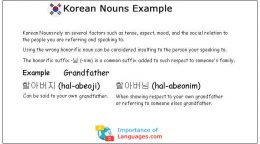
Korean Verbs rely on several factors such as tense, aspect, mood, and the social relation to the people you are referring and speaking to.

More information about Korean grammar can be found below.


Korean Grammar Rules

The challenging or confusing part of learning any language.. learning Korean Grammar Rules! The rules you must follow to properly speak the Korean language. But don’t worry about how hard learning Korean Grammar might feel at first. Learning Korean grammar rules is one of the most effective ways to speed up your ability to properly speak the Korean language. Keep in mind this is just a basic introduction to understanding how Korean grammar works.

Korean Grammar Rules: Sentence Structure

• In Korean, the order of the words in a sentence is subject + object + verb.
• Politeness and respect to seniority is a critical part of Korean culture and the Korean Language.

Examples of Korean Sentence

Korean Grammar Rules: Nouns and Pronouns

• Korean Nouns do not have a Gender. Korean Nouns can be made a plural by adding “?”
• Korean Pronouns have honorifics to show respect formally or informally.

Korean Nouns

Korean Grammar Rules: Verbs

• Korean Verbs uses three tenses: past, present, and future
• Verbs can change according to the age and/or seniority to the person your speaking to.
• Korean Verbs rely on several factors such as tense, aspect, mood, and the social relation to the people you are referring and speaking to.

Korean Verb Examples

Korean Grammar Rules: Adjectives

• Korean Adjectives are words that describe or modify another person or thing in the sentence

Learning Korean grammar rules can be considered the cornerstone of the language and will take some time to learn but creates a sturdy foundation to help you completely learn Korean in no time. Take the time to let these points soak in, then build on them as you continue your Korean studies. Good luck, and have fun learning Korean.

Korean Adjective Examples
Categories
Learn Korean Language

Korean Language Dialects List / Map

Within any language or language group, there may be significant changes in speech, vocabulary, and pronunciation. The term used to describe these changes is called a dialect. Some words or phrases that exist in one dialect may exist or be absent from different Korean dialects.

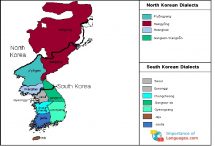
Korea is split into North and South Korea. North and South both have multiple regional dialects.

The most common Korean Dialects in South Korea is the Gyeonggi or Seoul Dialect.North Korean Dialects


Korean Language Dialect Map

Korean Dialects Map

Korean Dialects List

Pyongyang – Spoken in the P’yongyang, P’yong’an, and Chagang regions. Considered to be the primary Korean Dialects of North Korea.
Hamgyong – Spoken in the Hamgyongm, P’yong’an, and Ryanggang Provinces of North Korea.
Hwanghae – Spoken in the Hwanghae region of North Korea.
Gangwon/Kangwon – Spoken in the Yeongseo region of Gangwon and Kangwon Provinces.

South Korean Dialects

Seoul | Gyeonggi -Spoken in Gyeonggi, Incheon, Seoul, and Kaesong. Considered to be the primary Korean Dialects of South Korea.
Chungcheong – Spoken in the Chungcheong(Hoseo) region of South Korea.
Jeju – Spoken on Jeju Island, off the southwest coast of South Korea.
Jeolla – Spoken in the Jeolla province of South Korea. (Honam)
Gangwon-do – Spoken in the Yeongdong region of Gangwon and Kangwon Provinces.
Gyeongsang – Spoken in Gyeongsang includes the cities of Busan, Daegu, and Ulsan.

Different Korean Dialects of the Korean language are spoken in many different nations and regions around the world, most commonly throughout northern Asia. However, the differences in regional dialects may not make one Korean speaker nearly incomprehensible to another.

In most cases, the different Korean dialects don’t have a specific written form of the language, but there’s usually a certain amount of literature that accompanies each Korean dialects

Categories
Learn Korean Language

Learn Korean Alphabet – Korean Language Alphabet Chart

Learning to read the Korean Alphabet should be the first stop for Korean beginners. Korean has personally my favourite alphabet to learn because of its unique structuring and style of writing.

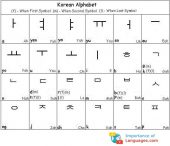
Korean Alphabet has 35 characters overall with 10 vowels, 14 constants, and 11  (Complex vowels made up of regular vowels).

Learn Korean Written Alphabet is also known as Hangul alphabet or script and has origins that from Chinese. The Korean Alphabet contains ten main vowels, fourteen consonants, and eleven complex vowels(Known as Diphthongs). Until 1980, Korean was written from right to left but since then Hangul has changed direction to be written left to right. An interesting fact when you want to learn the Korean alphabet. The shapes of the consonants are based on the shape the mouth made when pronouncing the corresponding sound is made. Some consonants were created by adding extra lines to the original shapes.


Korean Diphthongs Complex Korean Vowels

Korean letters are group together in blocks or boxes to form syllables. These syllables are formed with an initial consonant, then either one or two vowels to the right of the initial constant or below the initial consonant. The consonant “ng” is silent when placed in the initial position. Example of how Korean is written and how to read Korean below.

Categories
Learn Japanese Language

Japanese Basic Grammar Introduction – Japanese Grammar Rules

The Japanese grammar rules you must follow and understand to properly speak the Japanese language.

  1. Japanese Sentence Structure is usually put the Object of the sentence ahead of the Verb/Adjective or simpified to Subject-Object-Verb.
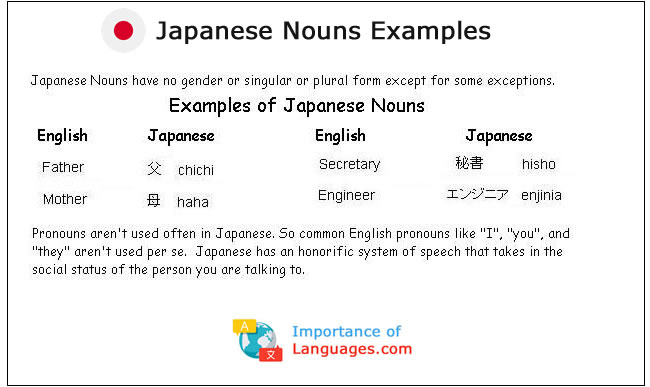
  2. Japanese nouns don’t have any gender associated with them. Japanese pronouns are rarely or never used.
  3. Japanese also takes into consideration the social status of the person you are speaking to.
  4. Japanese uses more verbs then any other language and they don’t change with number, gender, or person.
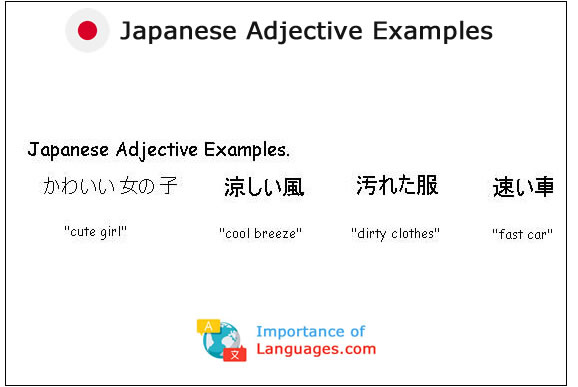
  5. There are two types of Japanese Adjectives. They are “-i adjectives” and “-na adjectives”.

Japanese Grammar Rules

The fun part of learning any language.. Grammar!

The “rules” you must follow to properly speak a language. But don’t worry about how hard learning Japanese Grammar might feel at first. Learning Japanese grammar rules is one of the most effective ways to speed up your ability to speak a language.

Keep in mind this is just a basic introduction to understanding how Japanese grammar works

Japanese Grammar Rules: Sentence Structure

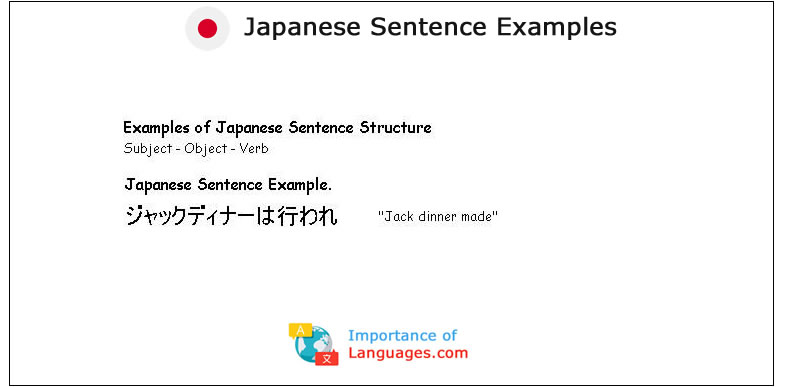
• Japanese Sentence Structure is usually put the Object of the Sentence ahead of the Verb/Adjective.

Japanese Sentence Examples

Japanese Grammar Rules: Nouns and Pronouns

Japanese Nouns Examples

• Japanese Nouns don’t have a masculine or feminine form to remember.
• The Use of Pronouns in Japanese is very limited or almost non-exist
• Japanese uses more particles and verbs to deal with the loss of pronouns.


Japanese Grammar Rules: Verbs

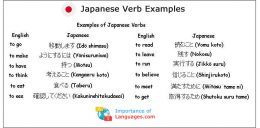
• The Japanese have two tenses: The simple present and the simple past.
• Verbs in Japanese grammar also do not change with number, gender or person
• Verbs are the essence of Japanese Sentences. Using more verbs then any other language.

Japanese Verb Examples

Japanese Grammar Rules: Adjectives

• There are two types of Japanese Adjectives. They are “-i adjectives” and “-na adjectives”
• “-i adjectives” are original Japanese words while -na adjectives are burrowed from other languages.
• “-i adjectives” tend to blur the line between adjectives and verbs
• “-na adjectives” modifies nouns but not predicates

Japanese Adjective Examples

Common Japanese Words

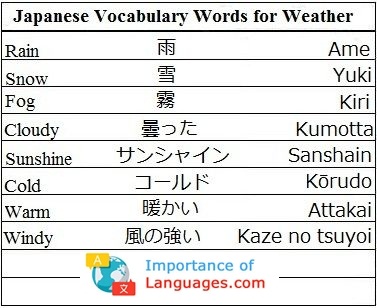
Japanese Words For Weather

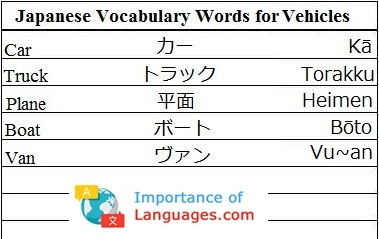
Japanese Words For Vehicles

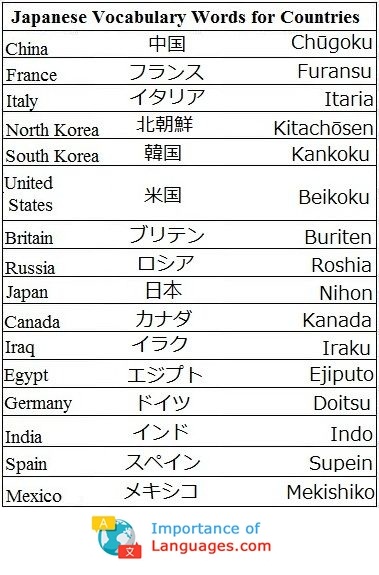
Japanese words for countries

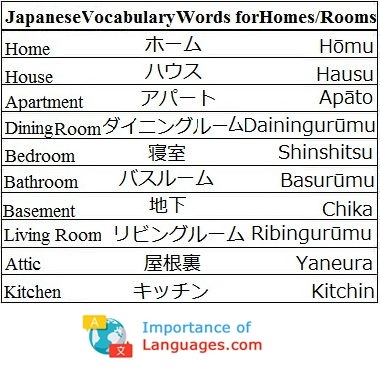
Japanese Words For Homes Rooms

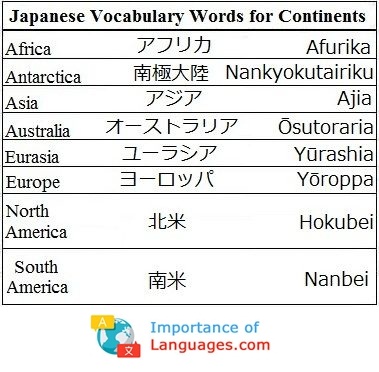
Japanese Words for Continents

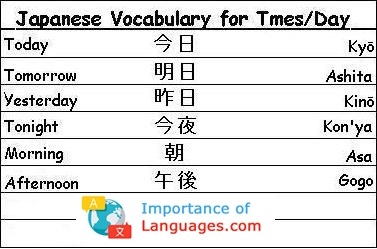
Japanese Words For Times / Day

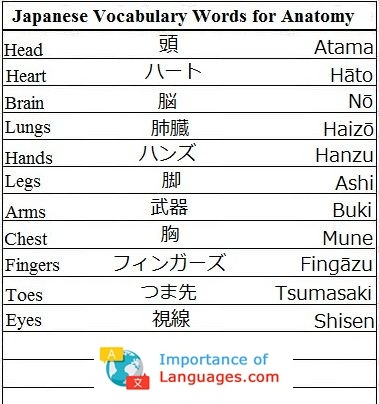
Japanese Words For Anatomy

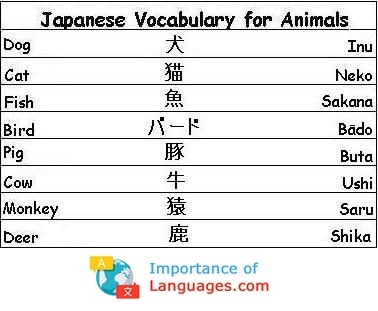
Japanese Words for Animals
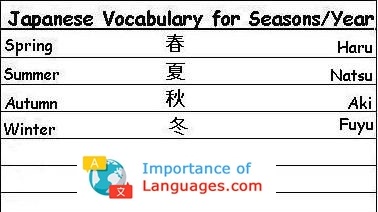
Japanese Words For Seasons / Year
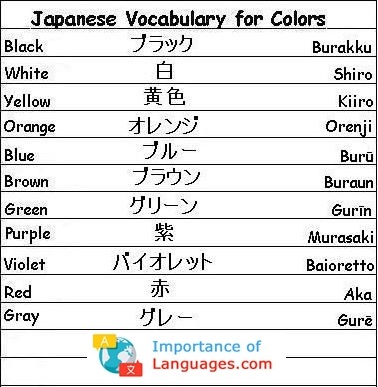
Japanese Words for Colors

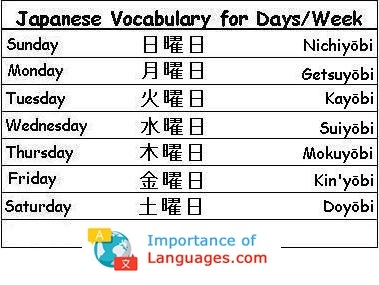
Japanese Words For Days / Week

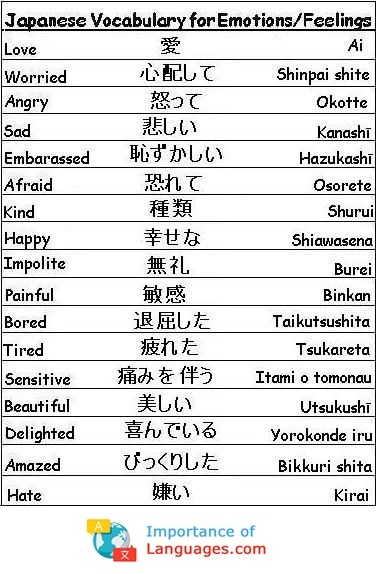
Japanese Words for Emotions Feelings

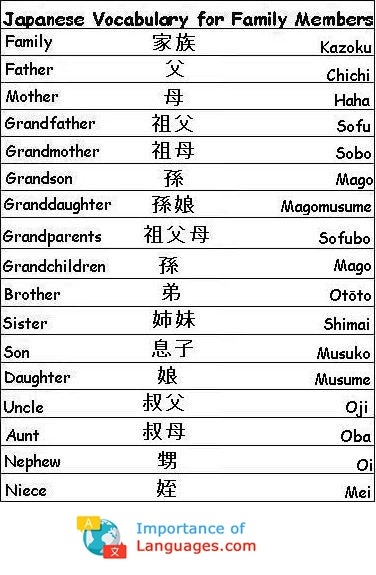
Japanese Words For Family Members

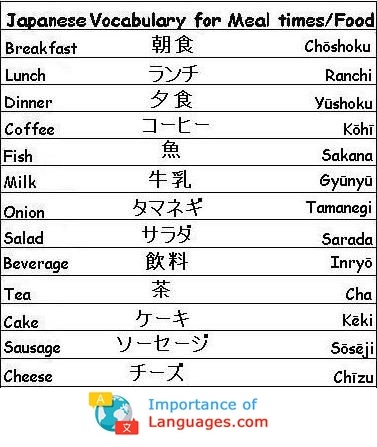
Japanese Words For Meal times Food

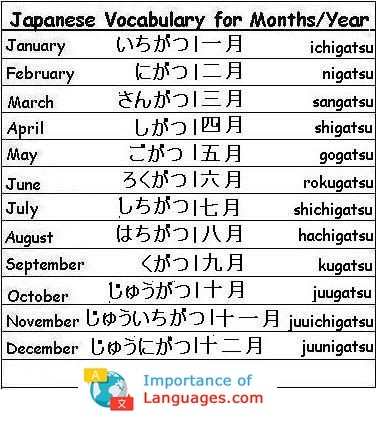
Japanese Words for Months / Years

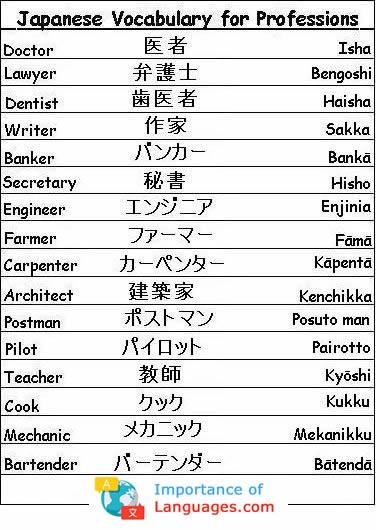
Japanese Words for Professionals

Categories
Learn Japanese Language

Learn Japanese Numbers. Learning Japanese Language Numbers

Understanding how to write Japanese numbers should take very little time and effort to learn. Understanding how to write Japanese numbers is really that simple to learn. Only takes an hour or two to fully memorizes the Japanese number system.

Japanese Numbers are written from Left to Right.


Japanese Number 1 to 10

Japanese Numbers

Japanese Numbers 1 to 100

Japanese Numbers 1 to 100

You basically write the Japanese Characters in order. If the number is a double or triple digit number you write the Number times Position, Number times Position.

It’s actually pretty straightforward when it comes to learning how to use the Japanese number system. Pronouncing Japanese numbers is just as easy to learn.

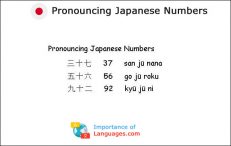
Japanese Number Examples

Japanese number examples

You really just need to memorizes how to pronounce the base Japanese Numbers then you can easily pronounce any Japanese number. I personally choose to remember that Japanese numbers follow a “number-position” type pattern. Example of what I mean..

Categories
Learn Japanese Language

Learn Japanese Alphabet – Japanese Language Alphabet Guide

Learning to read the Japanese Alphabet should be the first stop for Japanese beginners. Japanese has probably the most confusing alphabet system for beginners.
Learn Japanese Alphabet consists of 3 different Alphabets that are used in different circumstances or sometimes used together to form words and phrases.

Types of Japanese Alphabets

The Japanese alphabet is overall known as Kana, consisting of three alphabets:

  • Hiragana
  • Katakana
  • Kanji.

The Japanese alphabet overall is [su_highlight]phonetic alphabet where each symbol is a spoken syllable that represents a single sound[/su_highlight].

Essentially every Japanese word is written exactly how they are pronounced.


Hiragana Alphabet

• Hiragana expresses the grammatical relationship between them (endings of adjectives and verbs)
• Hiragana is used to represent native Japanese words.

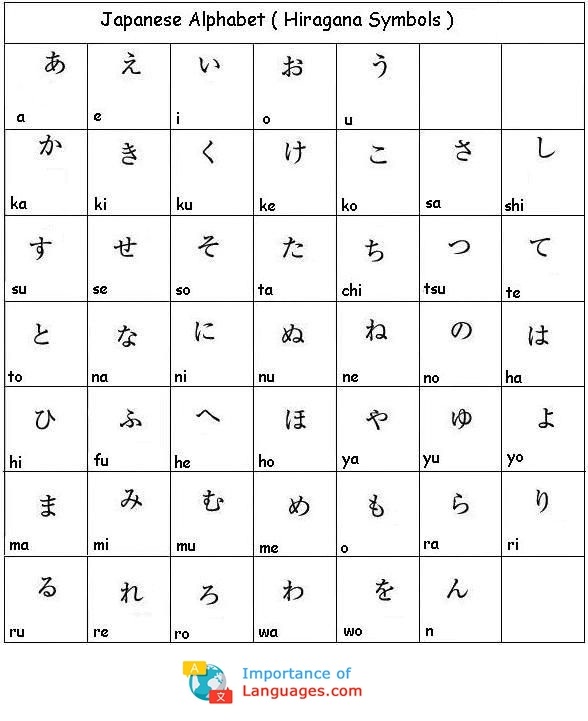
Japanese Alphabet Hiragana is a phonetic alphabet that contains 48 syllables that be sounded out to pronounce the word. Hiragana has characteristic cursive characters.

Japanese Alphabets Hiragana Symbols

Katakana Alphabet

• Foreign names and words of foreign origin.
• Foreign places
• Words of Foreign origins.

Japanese Alphabet Katakana is also a syllabic alphabet. There are 48 Katakana symbols that have similar sounds to Hiragana.

It is no coincidence that there is the same number of characters in both the Hiragana and Katakana alphabets as they both represent exactly the same sounds (some of them even look quite similar).

Japanese Alphabets Katakana Symbols

Kanji Alphabet

There is a third form of Japanese Alphabet that borrows or modifies Chinese Characters called Kanji. Kanji was borrowed from Chinese writing at a time when there was no written Japanese language and it is still around. Japanese Kanji has different meanings than Chinese characters today.

There are over 8000 Kanji. Kanji are not syllabic and are used to represent abstract concepts as well as names and everyday words. An average adult Japanese speaker must know at least 2000 off by heart. Although you don’t need to memorizes all of the Kanji. Each Kanji has several different meanings and pronunciations.

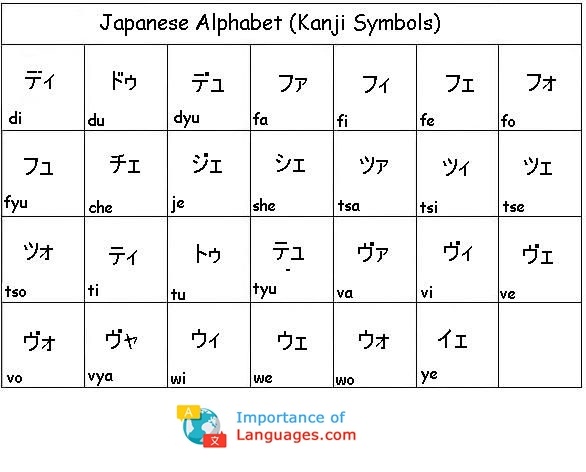
Japanese Alphabets Kanji Symbols

Japanese words are pronounced exactly as the symbols show but one thing to pay attention to is if the character has a diacritic mark above it or not.

Make sure to practice pronouncing and writing the Japanese Alphabet whenever you can. As many times as you can.

Because Japanese has three different alphabets: Hiragana, Katakana, and Kanji. Hiragana and Katakana are pretty similar with roughly 48 symbols each( some used, some not. Hiragana is for general use while Katakana is used for foreign names, the names of foreign places and words of foreign origin. Kanji are characters that are burrowed or modified from Chinese. Japanese number system is a lot easier to learn.

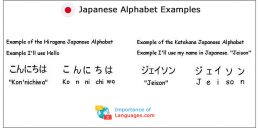
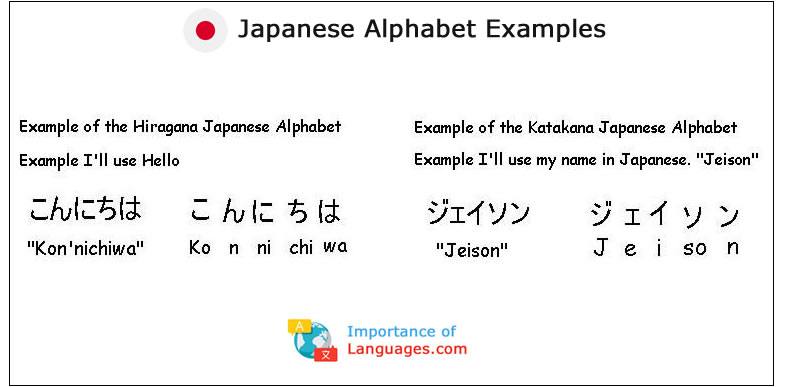
Japanese Alphabet Examples

Japanese Alphabet Examples

Categories
Learn Japanese Language

Japanese Language Dialect List & Map

Japanese Dialects Map

Within any language or language group, there may be significant changes in speech, vocabulary, and pronunciation. The term used to describe these changes is called a dialect. Some words or phrases that exist in one dialect may exist or be absent from different dialect. The most common dialect is the Kansai dialect that includes the Osaka dialect. Osaka is the dialect of the Tokyo area and is considered the standard dialect for Japanese. Unlike other languages, Japanese dialects can be very different from each other, almost to the point where they could be considered different languages and need subtitles.


Japanese Dialects List

Kansai Japanese – Second biggest region of Japan and host of many dialects. This group contains the Osaka dialect, which can be considered the “standard dialect” of Japanese. Kansai dialects are characterizes by their Kyoto-Osaka-type accent, strong vowel, copula ya, negative form -hen, etc.
Hichiku Japanese – A group of dialects in the southern Fukuoka region of Japan. Also includes the Tsushima Islands.
Honichi Japanese – Dialects of eastern Fukuoka, North and South Oita, and Hyuga.
Chugoku Japanese
Shikoku Japanese – Similar to the Chugoku dialect in many ways but differet in accent.
Gifu-Aichi Japanese – Group of dialects in the Gifu Prefecture of Japan.
Hokuriku Japanese – Refers to the dialects spoken in the Hokuriku region of Japan.
Nagano Yamanashi Shizuoka Japanese – Named after the Prefectures in which they reside. This dialect is characterizes by a presumptive suffix -zura or -ra.
Echigo Japanese – Dialects of the Niigaga Prefecture.
West and East Kanto
North and South Tohoku Japanese – The Tohoku dialect is spoken in North and south Tohoku Region in the Northwestern part of Japan. The Tohoku dialects differs a lot from standard Japanese.
Hokkaido – Dialects spoken in the Hokkaido region. This is dialect is separated into different groups. First, spoken along the coastal areas of Hokkaido, closely related to the Tohoku dialect. Second, is more in line with standard Japanese dialects.
Unpaku Japanese – Group of dialects that include the Shimane and Tottori Prefectures. This dialect differs from the others by the use of high “i” and “u” vowels.

Different Japanese Dialects of the Japanese language are spoken in many different nations and regions around the world, most commonly throughout northern Asia. However, the differences in regional dialects may not make one Japanese speaker nearly incomprehensible to another. In most cases, the different Japanese dialects don’t have a specific written form of the language, but there’s usually a certain amount of literature that accompanies each Japanese dialects.


Japanese Dialects Map

Japanese Dialects Map
Exit mobile version