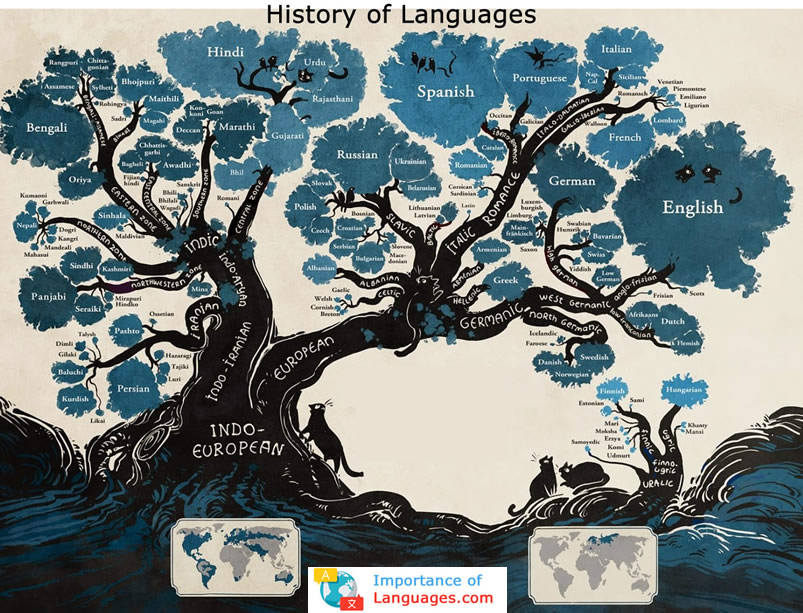
Italian is truly an amazing language to learn. Italian is a Romance language spoken by over 80 million people in Italy, Switzerland, San Marino, the Vatican City, Malta and Eritrea. There are also many Italian speakers in Chile, Argentina, Brazil, Australia, Canada, the USA and the UK.
Why Learn Italian?
Like many languages in Europe, Italian is a romance language that has the most characteristics in common with Latin. Most native speakers of Italian are bilingual of both standardized Italian and their regional dialect.
Reasons to learn Italian include visiting an Italian country, your significant other speaks Italian, to increase job viability or one of the others listed below.
Italian Food, art, and Fashion: Many people around the world say Italian food is one of the most attractive and tasteful cooking in the world. Milan is the fashion capital of the world so if you like the fashion, supermodels, and world-class designers. If you are a fan of the opera and want to understand your favorite opera singers when they belt out those really high notes.
Understand the Cultural Importance of Italian: Maybe you fell in love with the rolling hills of Tuscany on your first visit to il bel paese—or maybe you fell in love with an Italian! Maybe your grandparents emigrated from Italy, so you want to investigate your family history. Perhaps you’re an aspiring musician who wants to learn what adagio, allegro, and andante mean or an opera singer who wants to improve her pronunciation.
Italian is truly an amazing language to learn. I hope you find this article helpful in narrowing and strengthening your reasons to learn Italian
This guide was written for Italian Beginners that don’t know where to start learning the Italian language.
Italian is spoken by Eighty Million people over in Italy and other countries in Europe.


Contents
Countries where Italian is spoken:
- Italy
- Malta
- San Marino
- Parts of Switzerland
- Croatia
- Slovenia
- France.
- Vatican City
Italian Language Interesting Facts
The longest word contains 29 letters.
The longest word in Italian is the 29-letter esofagodermatodigiunoplastica. Refers to a reconstructive surgery related to the removal of the stomach.
The official language of classical music is Italian
Classical invented in Italy during the Renaissance, and thus became the standard language used in classical music.
Italian didn’t become a single, official language until 1861.
Learn Italian Alphabet Letters
The Italian alphabet contains 21 letters of the English Alphabet. The letters j, k, w, x, and y are missing from the Italian alphabet but they do however appear in words burrowed from other languages.
The following letters do appear in Italian. They are used mainly in foreign words borrowed from other languages and their pronunciation is based on the word they appear in.


The Italian alphabet uses two diacritical accent marks primarily used on vowels. An incorrect or missing accent mark is a spelling mistake just as an incorrect or missing letter would be.
The Acute Accent can only be included on the vowels e, or o when they end words.
The Grave Accent can be included on all vowels that end words.


Italian Numbers
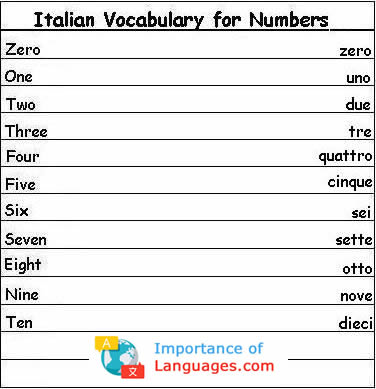
Italian Numbers are like English but with the different pronunciation.


Italian vocabulary numbers 1-10

Italian Numbers 1-100


Map of the key Italian Language Dialects
Within any language or language group, there may be significant changes in speech, vocabulary, and pronunciation. The term used to describe these changes is called a dialect. Some words or phrases that exist in one dialect may exist or be absent from a different dialect.


Italian Vocabulary
Logical next step for Italian Beginners after learning the Italian Alphabet would be to start developing your Italian vocabulary with Italian words and phrases.
Italian Grammar
The Italian grammar rules you must follow and understand to properly speak the Italian language.
| Basic Italian Vocabulary Words | |
| Hello | Ciao |
| Goodbye | addio |
| Yes | sì |
| No | no |
| Please | per favore |
| Thank You | Grazie |
| Welcome | benvenuto |
| Excuse Me | mi scusi |
| Sorry | scusa |
| Where? | bove? |
| When? | Quando? |
| How? | Come? |
| Who? | Chi? |
| Which? | Quale? |
Italian Grammar Rules
The fun part of learning any language. Grammar!
The “rules” you must follow to properly speak a language. But don’t worry about how hard learning Italian Grammar might feel at first. Learning Italian grammar rules is one of the most effective ways to speed up your ability to speak the Italian language.
Italian Grammar Rules: Sentence Structure
• The basic sentence structure of Italian is subject-verb-object. Just like English.


Italian Grammar Rules: Nouns and Pronouns
• Italian Nouns can be either Masculine or Feminine
• Most Italian end in a vowel sound, those that don’t are usually of foreign origins.
• Nouns that end in “-ore” are usually Masculine while nouns that end in “-ione” are Feminine.


Italian Grammar Rules: Verbs
• Italian Verbs usually have a “Mood” attached to them to indicate the speaker or writers feeling to the action being described.
• There are 4 moods in Italian: Indicative, Subjunctive, Conditional, and Imperative. Three more moods exist in Italian that doesn’t indicate the speaker. Theses are Infinitive, Participle, and Gerund.
• Each mood can be divided into one or more tenses.(Past, Present, Future)
Italian Grammar Rules: Adjectives
• Most Italian Adjectives are either plural or singular depending on the ending
• Singular Adjectives can be either Masculine or Feminine and usually end in “-e”
• Plural Adjectives usually end in “-i”. In the case of a word ends in “-io” the “o” is dropped from the word to form the plural.
Most Italian end in a vowel sound, those that don’t are usually of foreign origins. Italian has several “moods” for its verbs that indicate the speaker’s feelings towards the action being done as well as what “tense” or time it’s being done. Italian Adjectives can have a gender as well depending if they are singular or plural.


Learning Italian grammar rules can be considered the cornerstone of the language and will take some time to learn but creates a sturdy foundation to help you completely learn Italian in no time. Take the time to let these points soak in, then build on them as you continue your Italian studies. Good luck, and have fun learning Italian
Common Italian Phases
| Italian Greetings | ||
| Hi! / Hello | Ciaol | |
| Good Morning! | Buona Mattina | |
| Good Evening! | Buona Sera | |
| Welcome! | Benvenuti! | |
| Good Byel | Arnvederci | |
| How are you? | Come sta? | |
| I’m Fine. Thanks! | Sto bene. grazle. | |
| And you? | E voi? |

Common Italian Words
| Italian Vocabulary for Family Members | ||
| Family | famiglia | |
| Father | padre | |
| Mother | madre | |
| Grandfather | nonno | |
| Grandmother | nonna | |
| Grandson | nipote | |
| Granddaughter | nipote | |
| Grandparents | Nonni | |
| Grandchi ldren | Nipoti | |
| Brother | fratello | |
| 5ister | sorella | |
| 5on | figlio | |
| baughter | figlia | |
| Uncle | zio | |
| Aunt | zia | |
| Nephew | nipote | |
| Niece | nipote |


| Italian Vocabulary for Months/Year | ||
| January | gennaio | |
| February | febbraio | |
| March | marzo | |
| April | aprile | |
| May | maggio | |
| June | giugno | |
| July | luglio | |
| August | agosto | |
| September | settembre | |
| October | ottobre | |
| November | novembre | |
| December | dicembre |


| Italian Vocabulary for Emotions/Feelings | ||
| Love | amore | |
| Worried | preoccupato | |
| Angry | arrabbiato | |
| Sad | triste | |
| Embarassed | Imbarazzato | |
| Afraid | impaurito | |
| Kind | tipo | |
| Happy | felice | |
| Impolite | scortese | |
| Painful | delicato | |
| Bored | annoiato | |
| Tired | stanco | |
| Sensitive | doloroso | |
| Beautiful | bello | |
| bel ighted | ammirato | |
| Amazed | stupito | |
| Hate | odio | |


| Italian Vocabulary for days/Week | ||
| Sunday | domenica | |
| Monday | Lunedi | |
| Tuesday | martedì | |
| Wednesday | mercoledì | |
| Thursday | Giovedi | |
| Friday | venerdì | |
| Saturday | sabato |


| Italian Vocabulary for Colors | ||
| Black | nero | |
| White | bianco | |
| Yellow | giallo | |
| Orango | arandone | |
| Blue | blu | |
| Brown | marrone | |
| Green | verde | |
| Purple | porpora | |
| Violet | viola | |
| Red | rosso | |
| Gray | grigio | |


| Italian Vocabulary for Animals | ||
| bog | cane | |
| Cat | gatto | |
| Fish | pesce | |
| Bird | uccello | |
| Pig | maiale | |
| Cow | mucca | |
| Monkey | scimmia | |
| beer | cervo | |


| Italian Vocabulary for Seasons/Year | ||
| Spring | primavera | |
| Summer | estate | |
| Autumn | autunno | |
| Winter | inverno | |


| Italian Vocabulary Words for Anatomy | ||
| Head | testa | |
| Heart | cuore | |
| Brain | cervello | |
| Lungs | polmoni | |
| Hands | braccia | |
| Legs | Gambe | |
| Arms | stemma | |
| Chest | petto | |
| Fingers | dita | |
| Toes | Toes | |
| Eyes | Occhi | |


| Italian Vocabulary for Times/day | ||
| Today | oggi | |
| Tomorrow | domani | |
| Yesterday | ieri | |
| Tonight | stasera | |
| Morning | mattina | |
| Afternoon | pomeriggio | |


| Italian Vocabulary Words for Countries | ||
| China | porcellana | |
| France | Francia | |
| Italy | Italia | |
| North Korea | Corea del Nord | |
| South Korea | Corea del Sud | |
| United States | Stati Uniti | |
| Britain | Gran Bretagna | |
| Russia | Russia | |
| Japan | Giappone | |
| Canada | Canada | |
| Iraq | Iraq | |
| Egypt | Egitto | |
| Germany | Germania | |
| India | India | |
| Spain | Spagna | |
| Mexico | Messico | |


| Italian Vocabulary Words for Continents | ||
| Africa | l’Africa | |
| Antarctica | Antartide | |
| Asia | Asia | |
| Australia | l’Australia | |
| Eurasia | Eurasia | |
| Europe | Europa | |
| North America | America del Nord | |
| South America | Sudamerica | |


| ItalianVocabulary Words for Homes/Rooms | ||
| Home | casa | |
| House | casa | |
| Apartinent | appartamento | |
| Dining Room | sala da pranzo | |
| Bedroom | camera da letto | |
| Bathroom | bagno | |
| Basement | seminterrato | |
| Living Room | stanza | |
| Attic | Attico | |
| Kitchen | cucina | |


| Italian Vocabulary Words for Vehicles | ||
| Car | auto | |
| Truck | camion | |
| Plane | piano | |
| Boat | barca | |
| Van | furgone | |


| Italian Vocabulary for Mealtimes/Food | ||
| Breakfast | prima colazione | |
| Lunch | pranzo | |
| dinner | cena | |
| Coffee | caffè | |
| Fish | pesce | |
| Milk | latte | |
| Onion | cipolla | |
| 5alad | insalata | |
| Beverage | bevanda | |
| Tea | tè | |
| Cake | torta | |
| 5ausage | salsiccia | |
| Cheese | formaggio | |
| Italian Vocabulary for Professions | ||
| Doctor | medico | |
| Lawyer | avvocato | |
| Dentist | dentista | |
| Writer | scrittore | |
| Banker | banchiere | |
| 5ecretary | segretario | |
| Engineer | ingegnere | |
| Farmer | agricoltore | |
| Carpenter | falegname | |
| Architect | architetto | |
| Postman | postino | |
| Pilot | pi lota | |
| Teacher | insegnante | |
| Cook | cucinare | |
| Mechanic | meccanico | |
| Bartender | barista |
| Italian Vocabulary Words for Weather | ||
| Rain | pioggia | |
| Snow | neve | |
| Fog | nebbia | |
| Cloudy | nuvoloso | |
| Sunshine | luce del sole | |
| Cold | freddo | |
| Warm | caldo | |
| Windy | ventoso | |


Consider Using a Italian Language Learning Program


If you are really serious about learning Italian and want to maximize your time then you should consider using an Italian language course to further aid you in your quest to learn Italian. There are several great programs out there that deliver a great language learning experience. The advantages of a language learning program are the organization and having the next step already lined up. Most break down the lessons into 30-minute intervals that can fit into any type of schedule.
Flexible to retry a lesson to make sure you understand what you are learning and give you confidence in succeeding.
Examples of great Italian language programs can be found below.